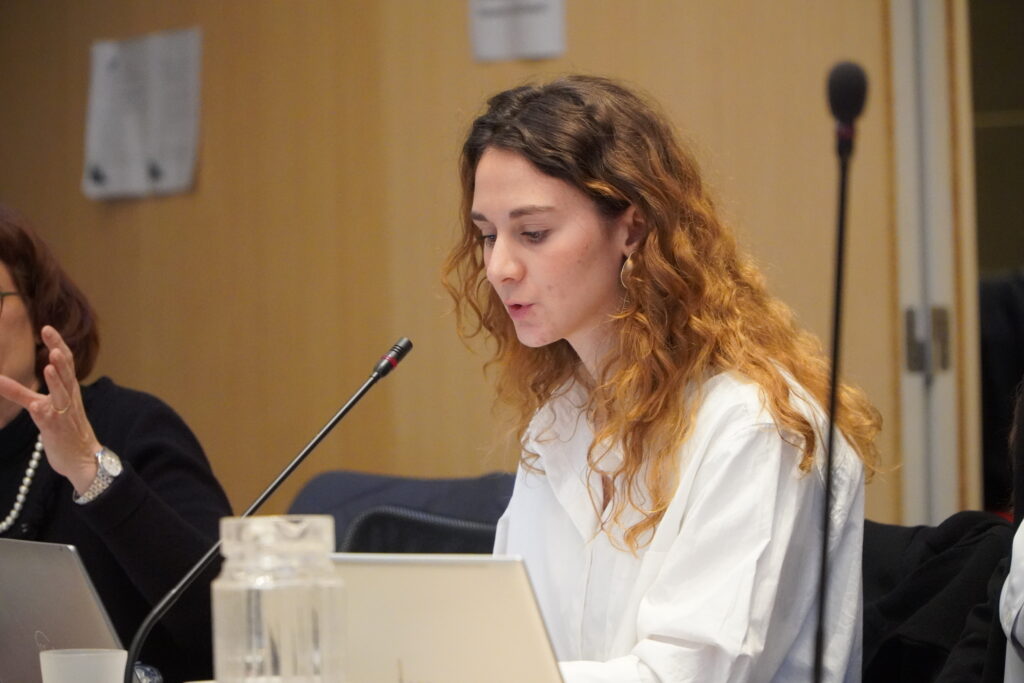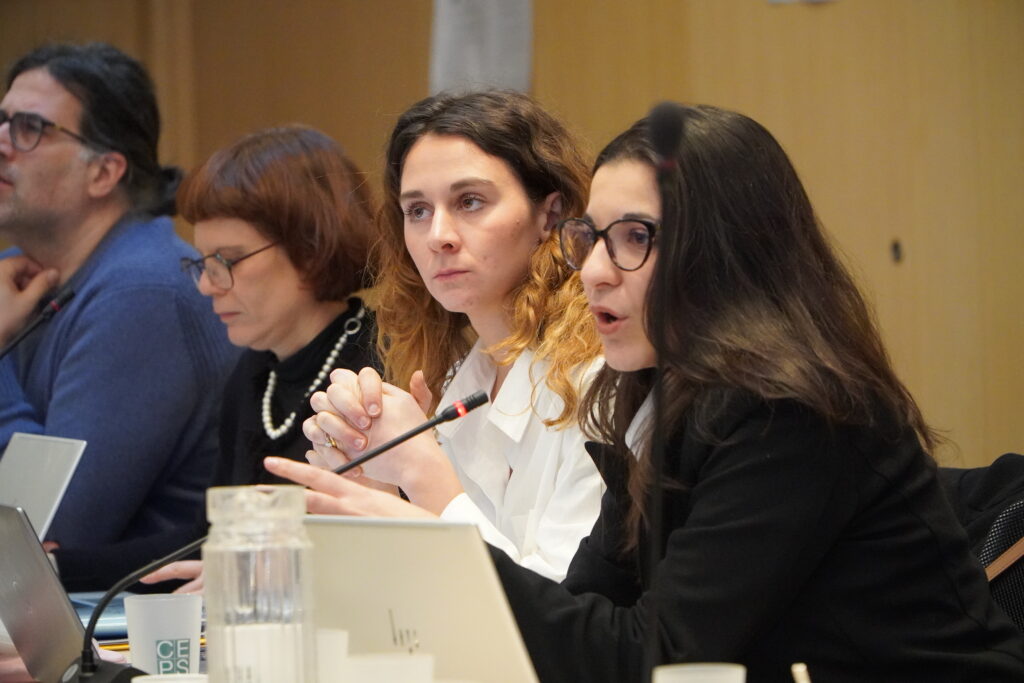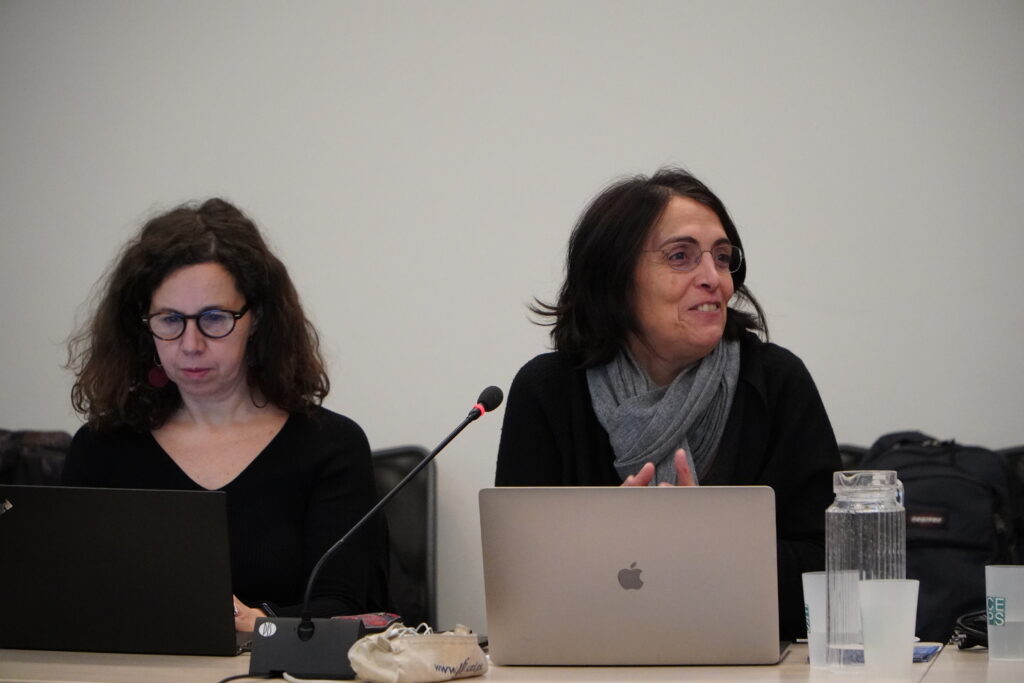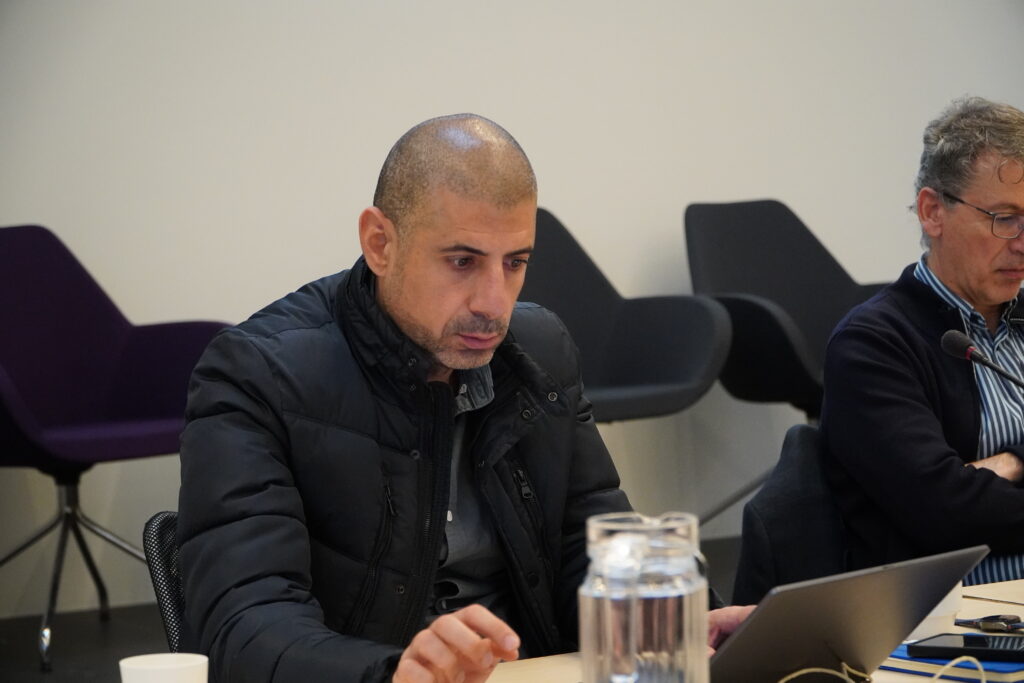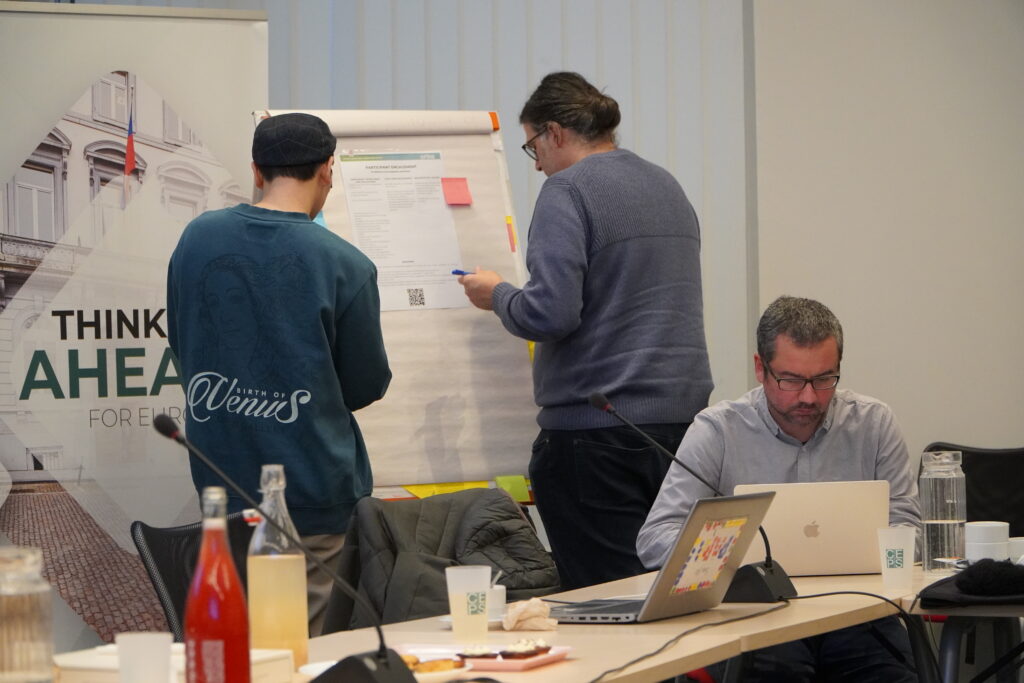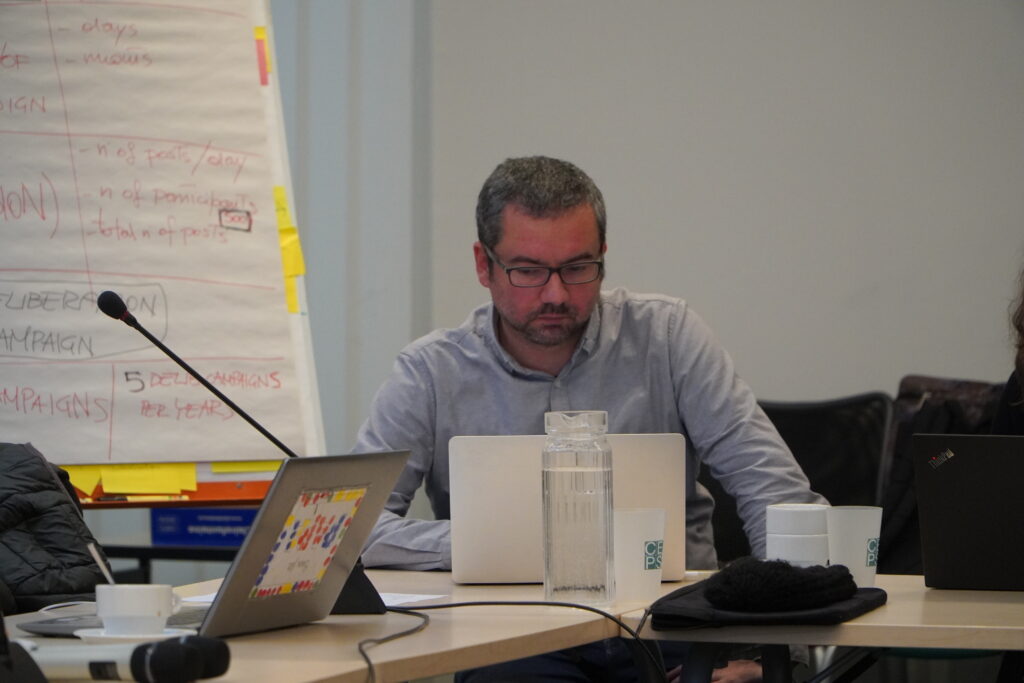
The consortium held its sixth project meeting in Brussels, hosted at the wonderful premises of CEPS. This was also the last in-person gathering before the end of the project, and it played a crucial role in aligning partners on the final stretch of activities, clarifying remaining open points and organising the very last steps needed to successfully complete the work.
Over the course of the day, the consortium held a series of working sessions addressing both the strategic and the operational/technical dimensions of the project.
The morning opened with a plenary session led by Uni System, focused on business modelling (T7.5). Partners discussed possible trajectories for the sustainability of the project, including the definition of an intellectual property rights (IPR) management strategy, the mapping of a clear and shared governance structure, and potential pathways to market. The discussion helped align expectations around the main outputs, identifying a number of governance and exploitation models that can be further developed in the coming months.
In the second part of the morning, the work was organised into two parallel sessions. On one side, POLIMI – in collaboration with the pilots and USI – coordinated a discussion on the evaluation framework under WP6. Partners reviewed the state of play of the pilots, discussed needs and emerging challenges, and outlined next steps in view of deliverables D6.2 and D7.4, both informed by data generated through the evaluation framework. In parallel, NVCR, together with the technical partners and FEL, led a joint technical session on WP4-5, focused on KPI collection across different platforms and data sources. The various datasets available were put “on the table” in order to harmonise them and build a shared set of performance indicators, useful both for internal monitoring and for overall project reporting.
In the afternoon, USI facilitated a session dedicated to the lessons learnt under WP7, aimed at systematically extracting insights, good practices and recurrent challenges arising from activities on engagement, communication and exploitation. The discussion allowed partners to bring their experiences into dialogue and to identify a number of priority lines of action for future work, with particular attention to long-term impact and the transferability of the tools developed.
In the final timeslot of the day, activities again split into two parallel sessions. CEPS and POLIMI led a foresight roundtable linked to WP6 (and partly WP3), involving the pilots in an exercise to project their activities in terms of scalability: they explored future scenarios, potential contexts for wider application and possible barriers to be addressed in order to consolidate project results beyond its formal duration. In parallel, NVCR and the technical partners worked on the final polishing of the toolkit (WP4-5), focusing on the remaining details of its components, on the integration between different modules, and on data visualisations, so as to ensure consistency, usability and clarity for end users.
Overall, the meeting made it possible to jointly take stock of governance, evaluation, technical work and future perspectives, laying the groundwork for the final phases of the project and defining a set of common operational and strategic priorities across all partners.