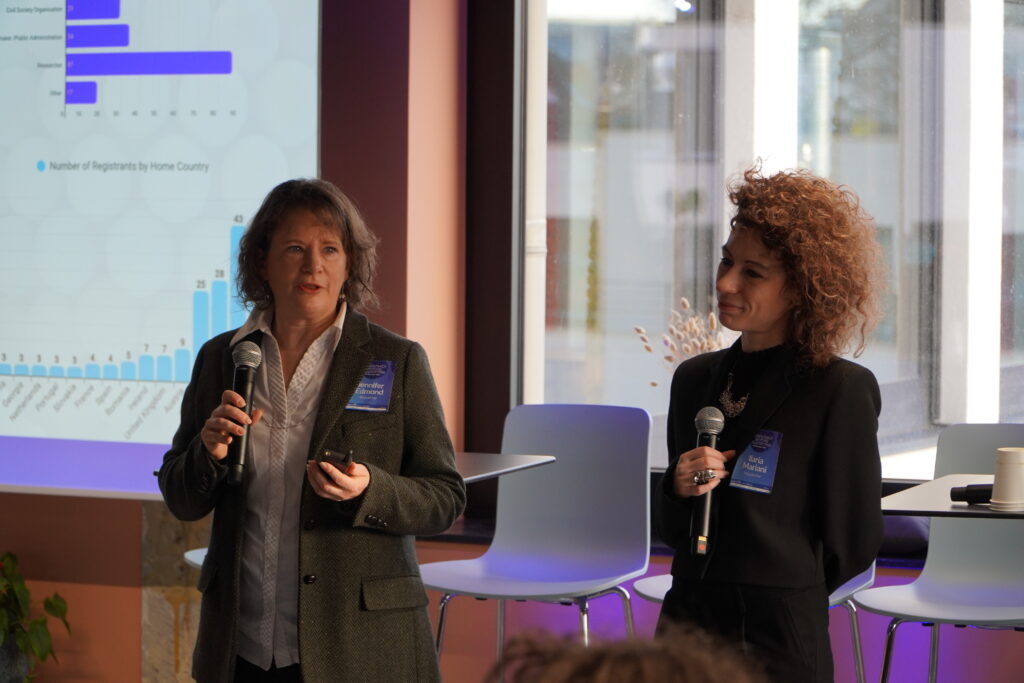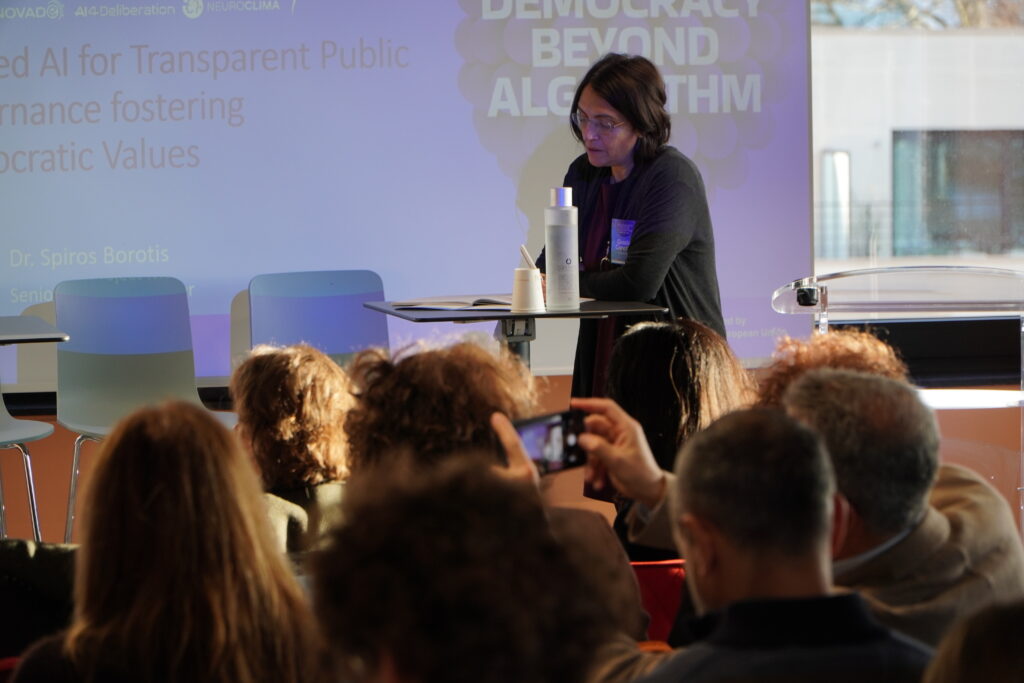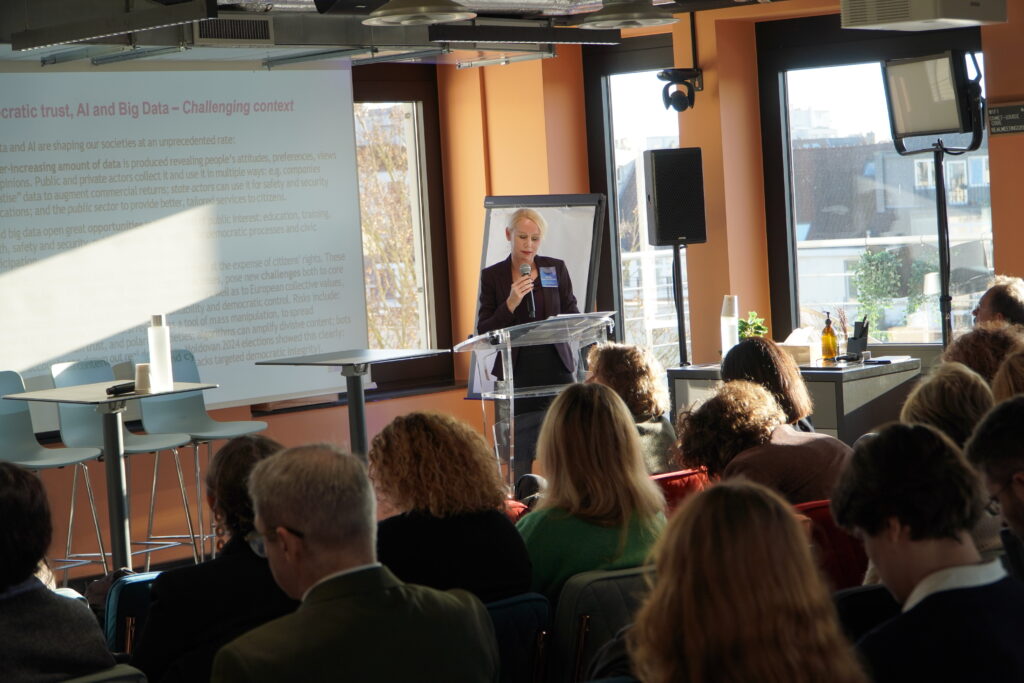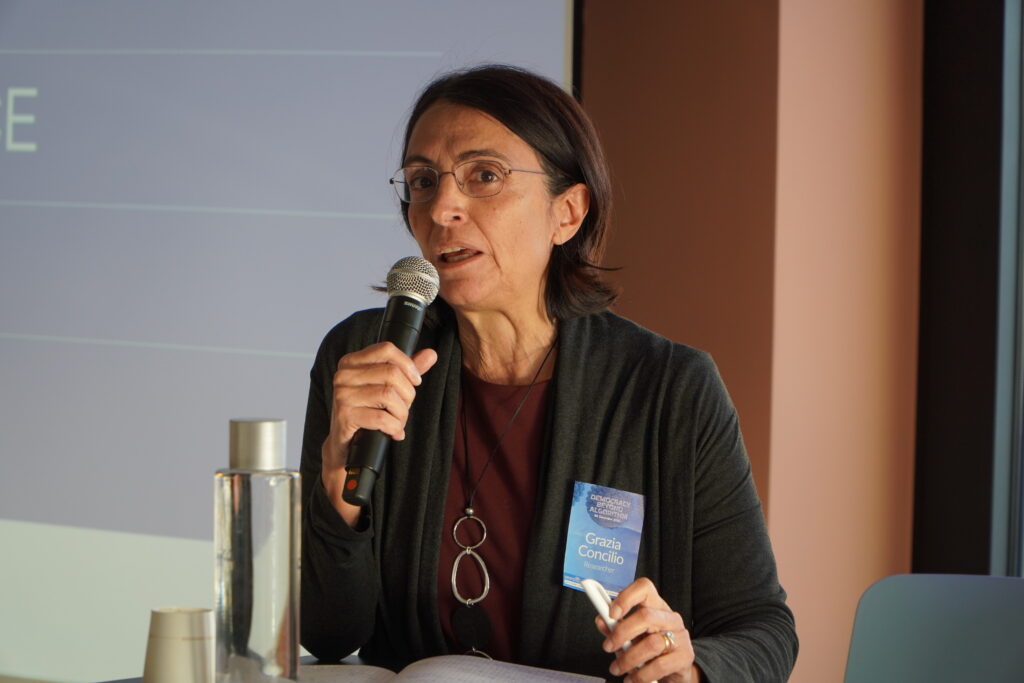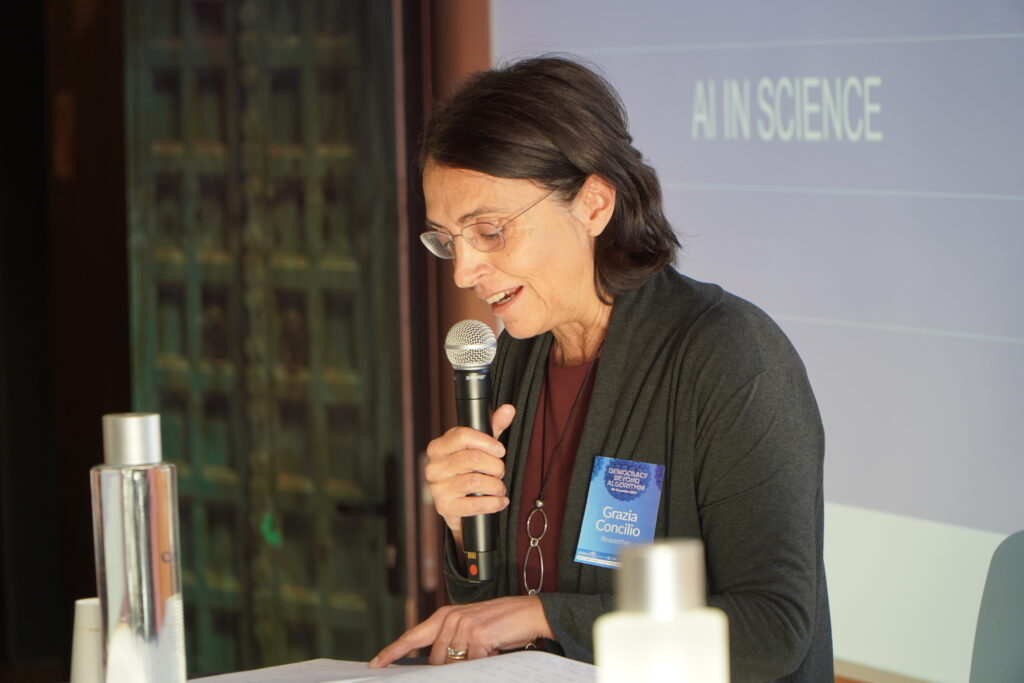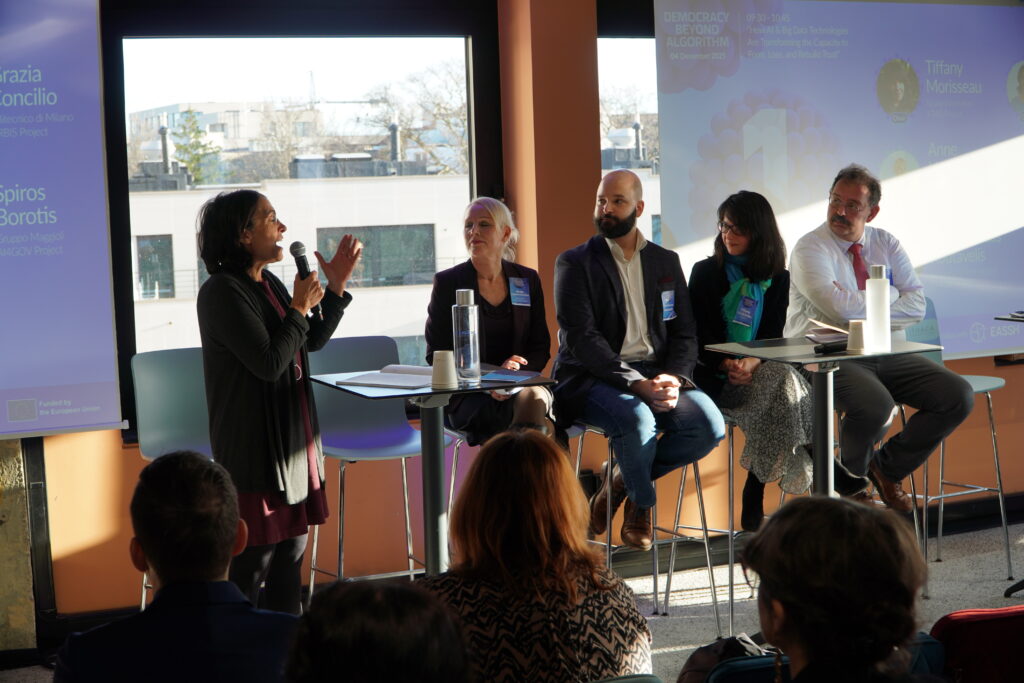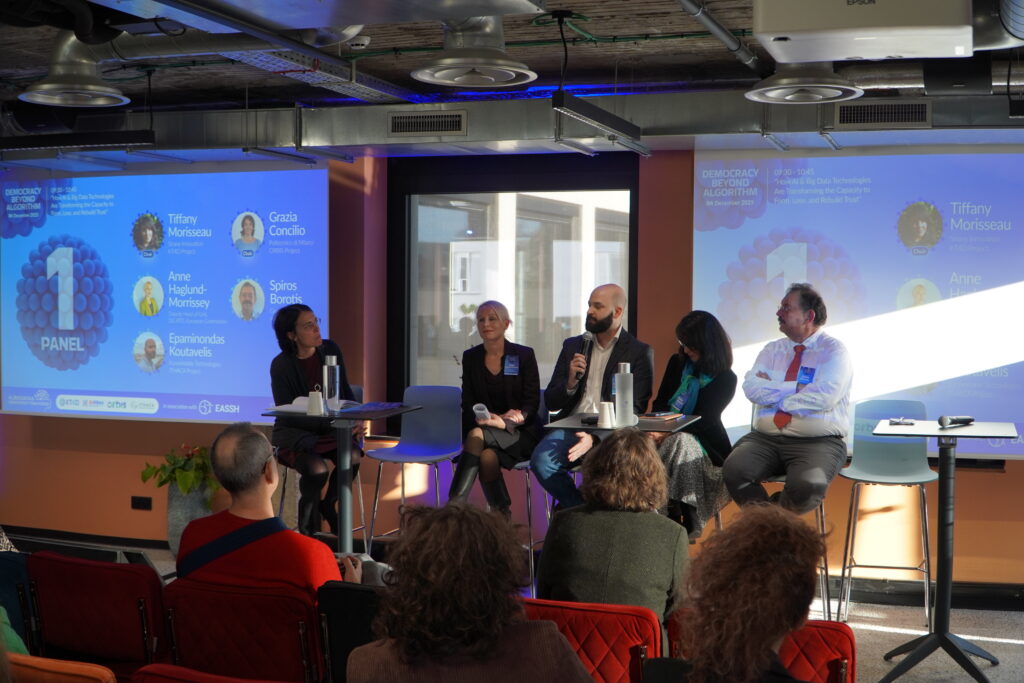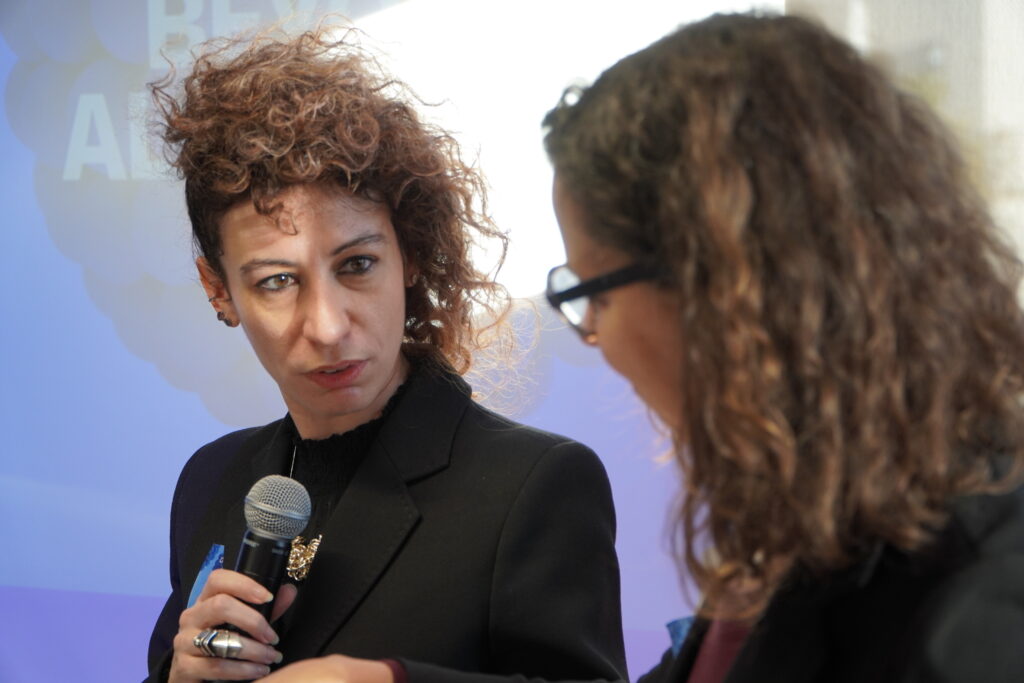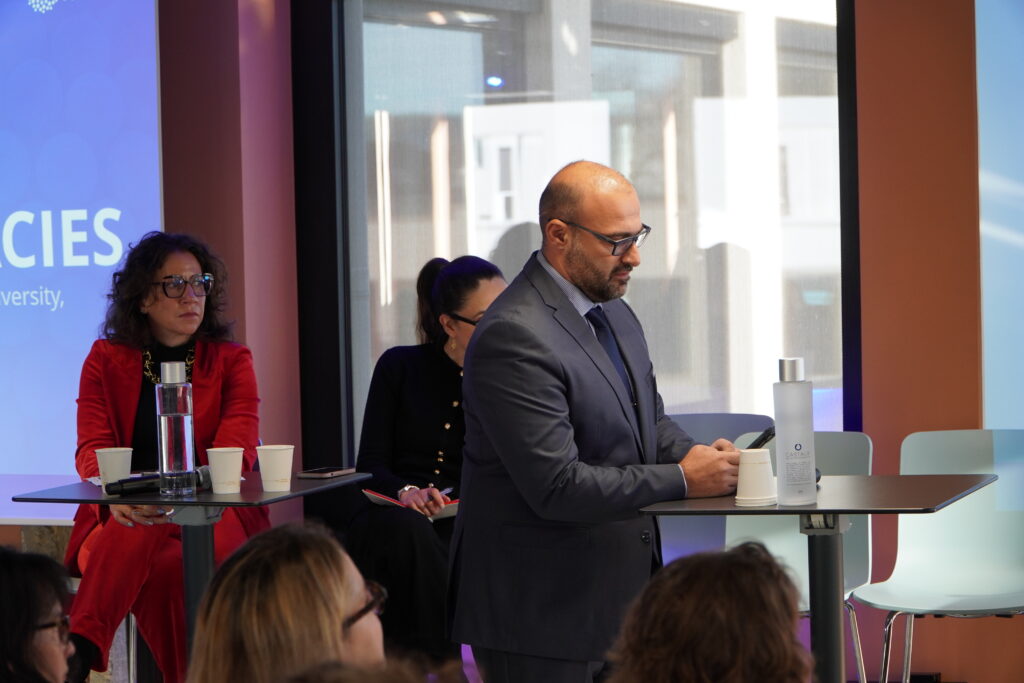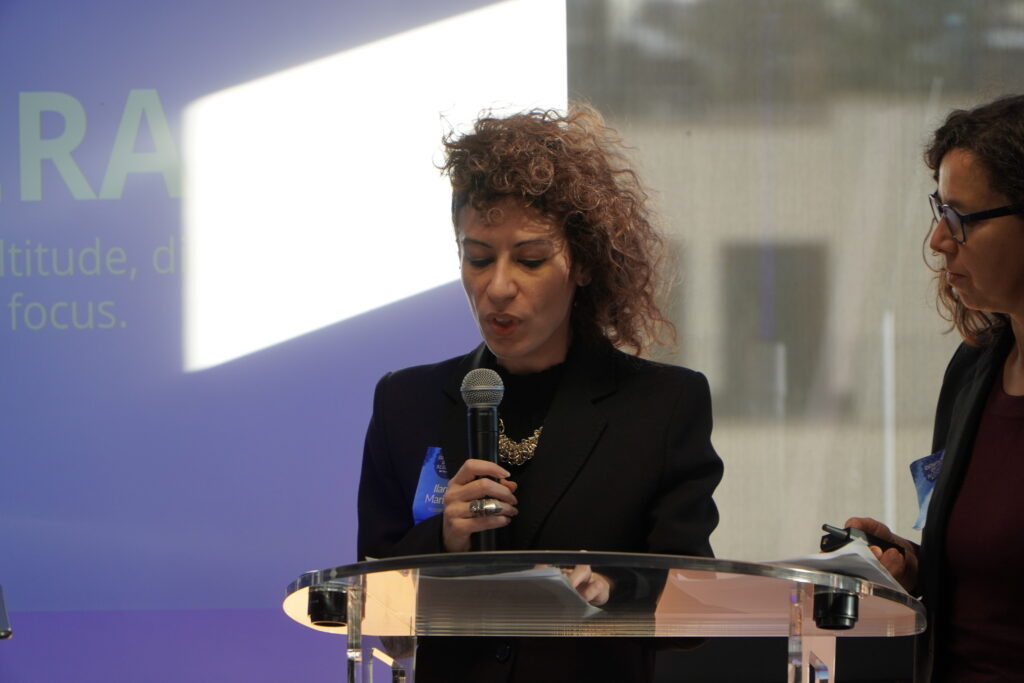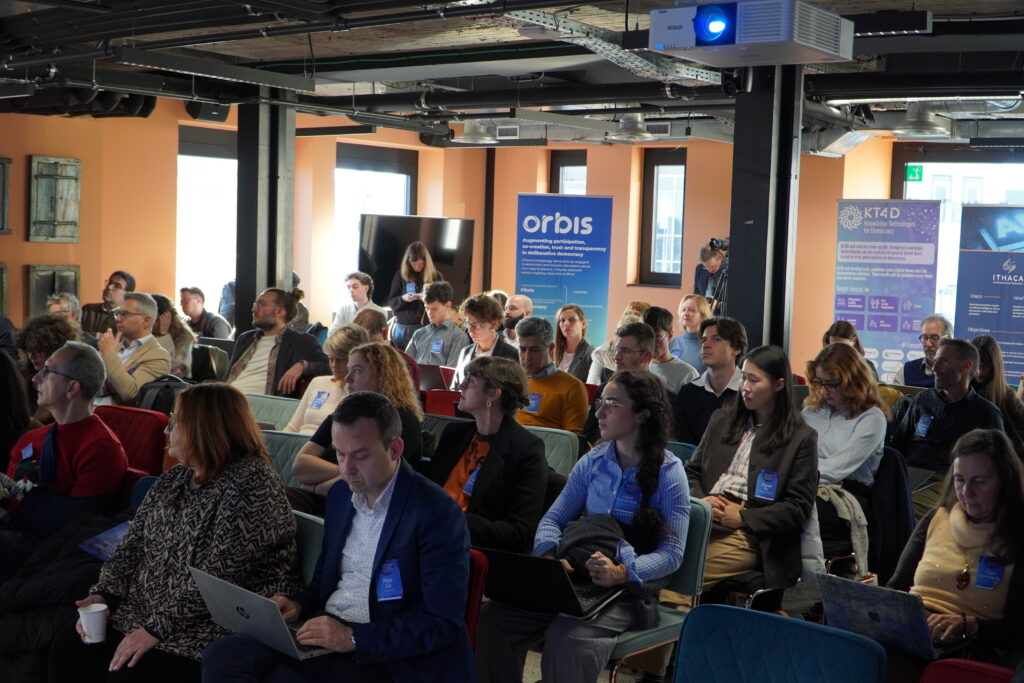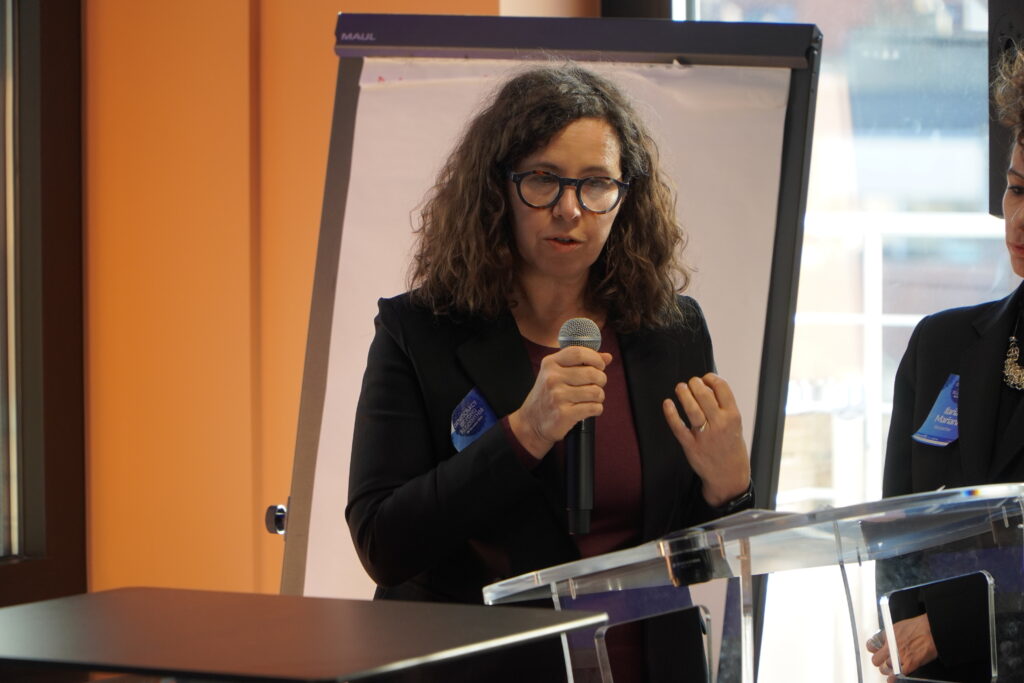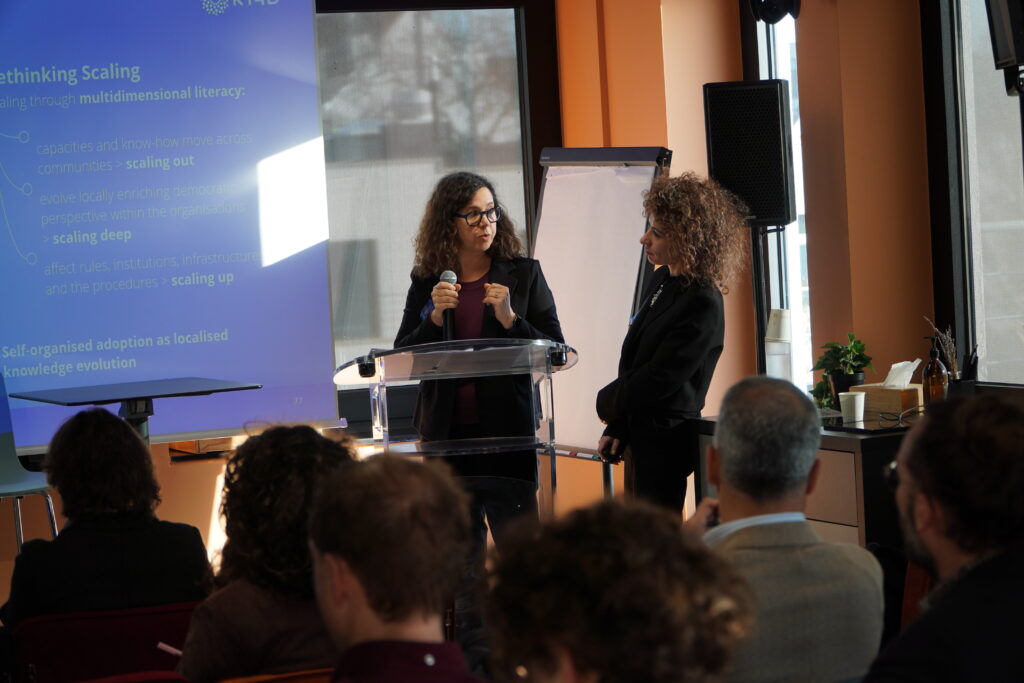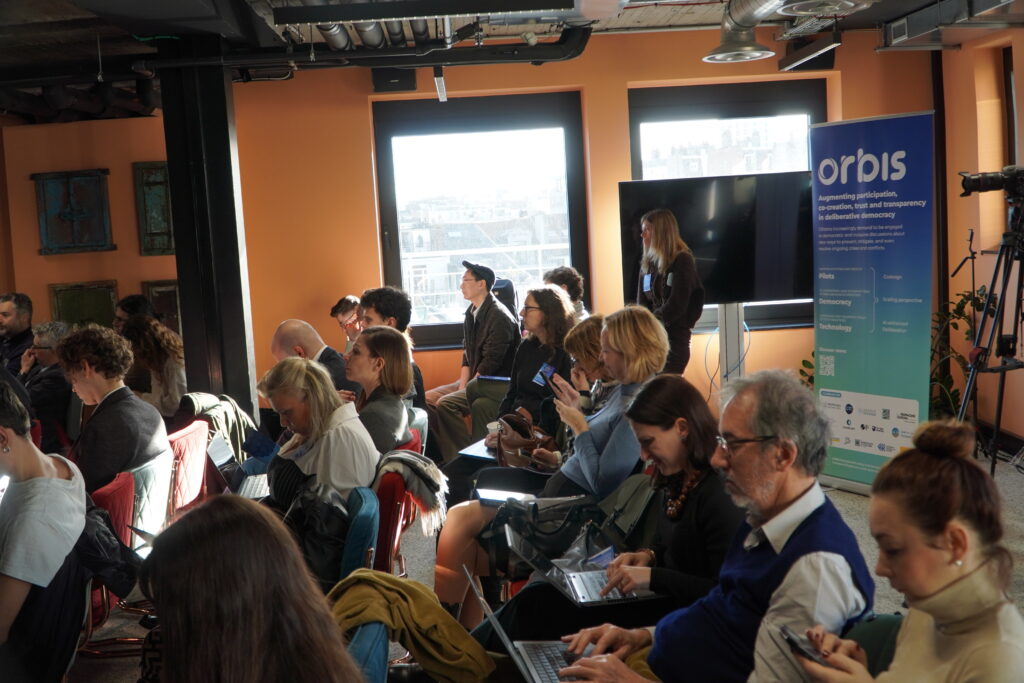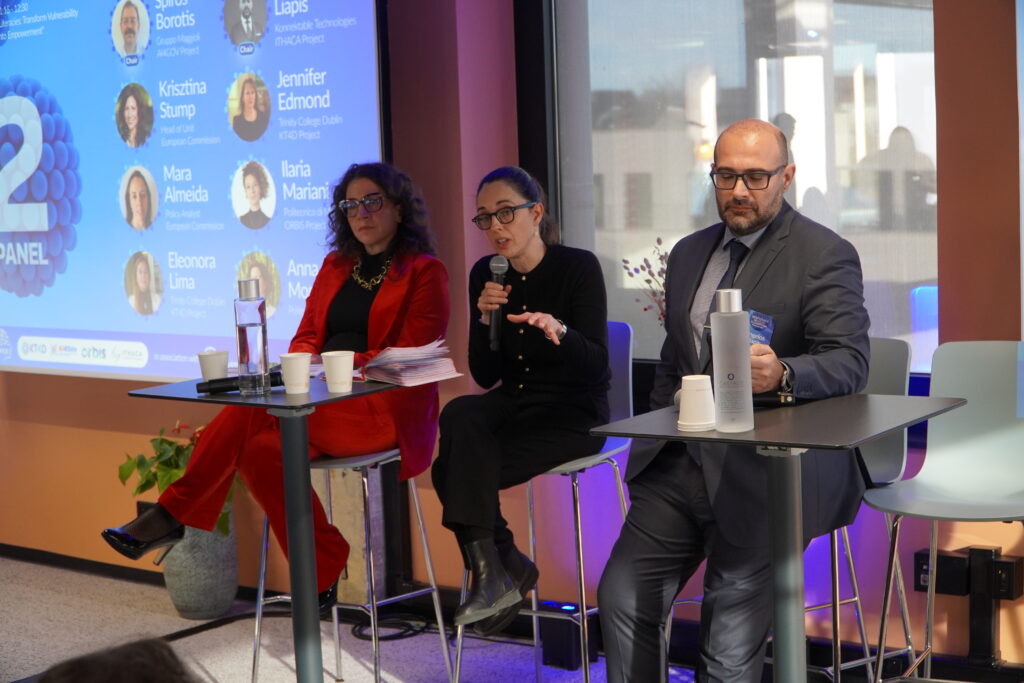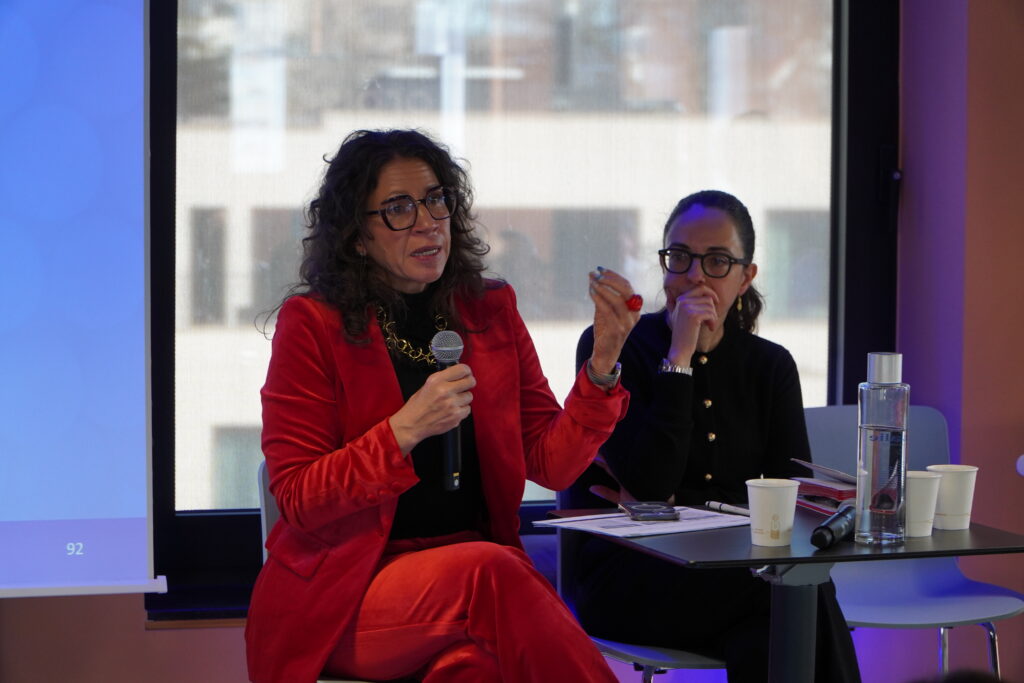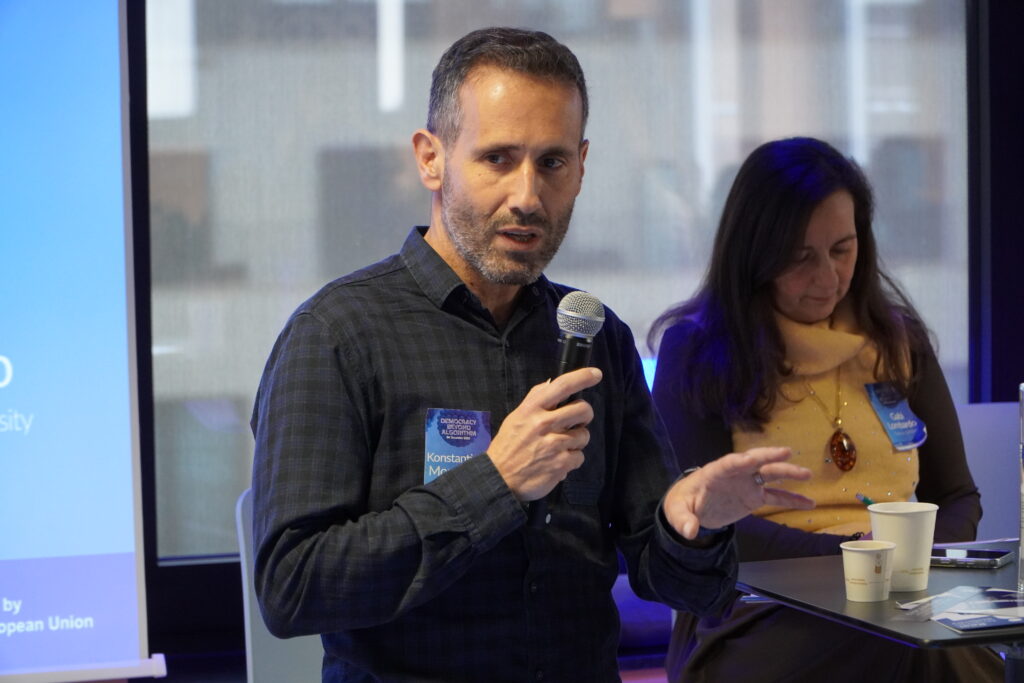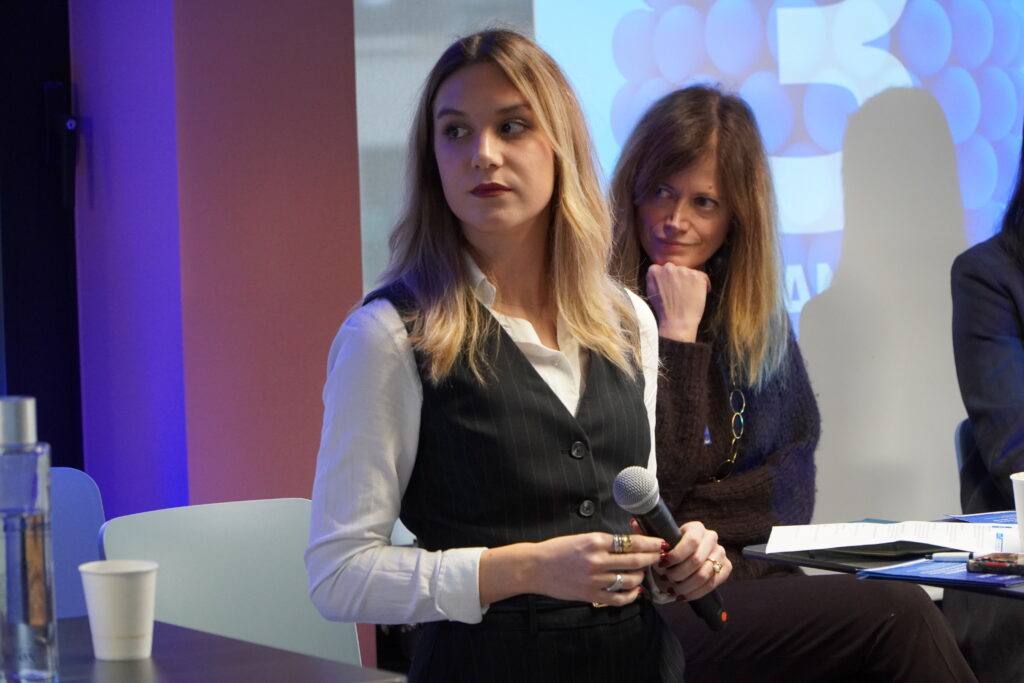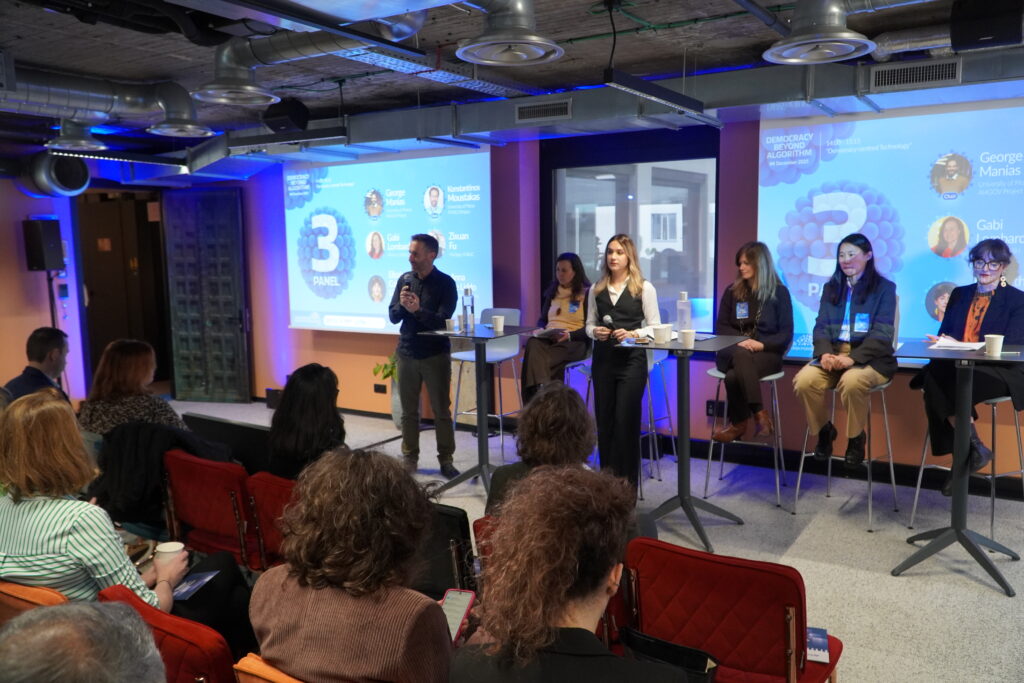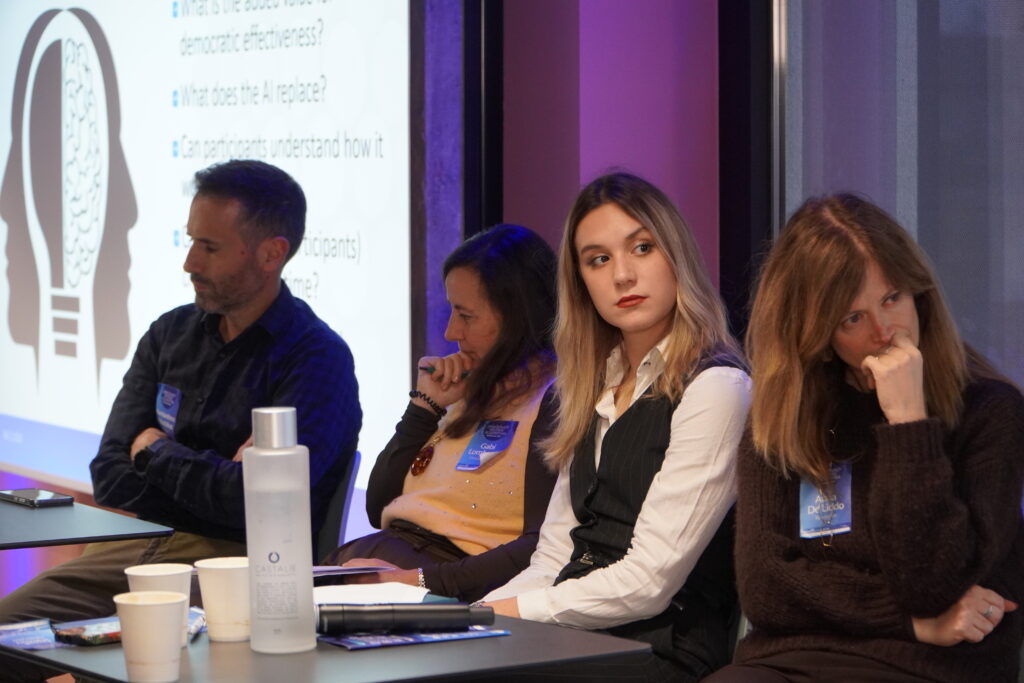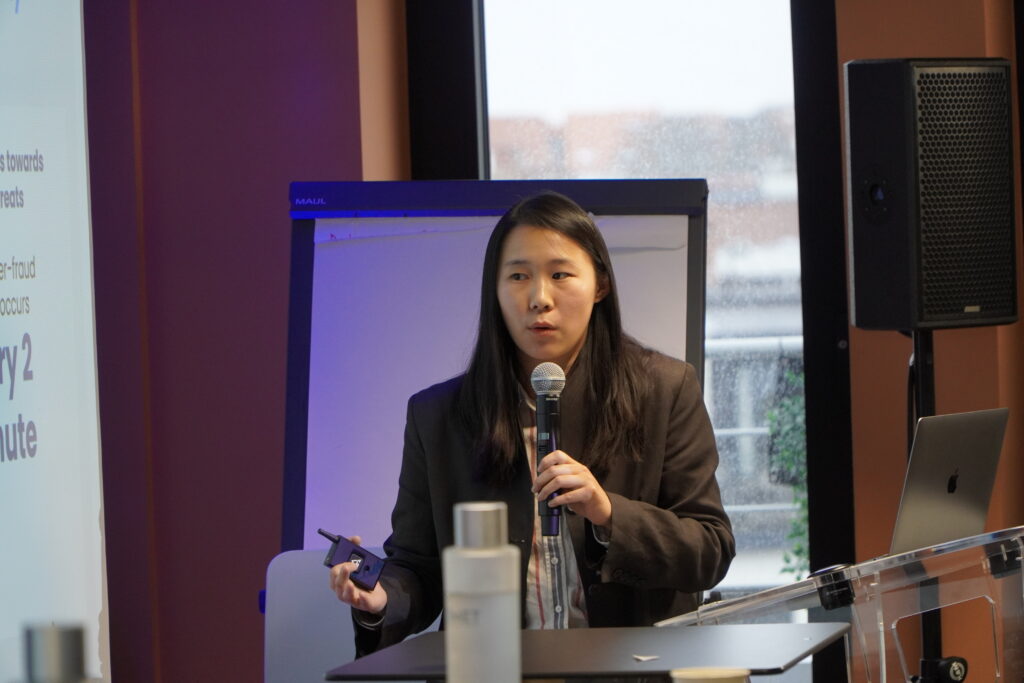
On 4 December 2025, ORBIS took part in the joint final conference of the AI, Big Data & Democracy Task Force and the European Alliance for Social Sciences and Humanities (EASSH), held in Brussels at Comet Meetings – Louise and online. The event marked the culmination of several years of collaboration within the Task Force, which brings together four Horizon Europe projects – AI4GOV, KT4D, ITHACA and ORBIS – to explore how Artificial Intelligence and (Big) Data can be used in ways that are not only innovative, but also transparent, accountable and genuinely democratic.
From an ORBIS perspective, the conference was both a showcase and a testing ground. Throughout the day, ORBIS partners contributed evidence from pilots, methodologies and tools that use AI to augment, rather than replace, democratic deliberation. Representatives from Politecnico di Milano and The Open University, among others, illustrated how ORBIS combines argument mining, large-scale digital participation platforms and human-centred design to help institutions listen better, map public reasoning and translate citizens’ contributions into meaningful input for policymaking.
The programme was structured around three thematic panels – Trust, Literacies and Democracy-centred Technology – each of which drew on the experience of the four projects in different ways. ORBIS played a visible role, for example, in the panels on literacies and democracy-centred technology, where its work on deliberative platforms, reflection tools and argument visualisation was presented alongside KT4D’s research on knowledge and transformation, and complemented by contributions from European Commission officials and other high-level experts. These exchanges highlighted the added value of ORBIS in showing how AI can be embedded into democratic processes in ways that respect pluralism, make reasoning visible and support informed participation.
Beyond panel discussions, the conference included moments for tool demonstrations and networking, where ORBIS showcased elements of its digital toolkit as concrete examples of “democracy-centred technology”. Participants had the opportunity to engage directly with the kinds of instruments ORBIS has developed – from large-scale opinion mapping to AI-assisted synthesis of public input – and to discuss how such solutions could be adapted and scaled in different institutional, civic and research contexts across Europe.
For ORBIS, the joint conference was less a closing point than a launchpad for future work. It offered a space to consolidate its contribution within the Task Force, align its policy recommendations with those of sister projects, and strengthen connections with policymakers, civil society organisations and fellow researchers working on democratic renewal in the digital age. The discussions on the future of the AI, Big Data & Democracy Task Force underscored the importance of sustaining this community of practice, ensuring that the knowledge, networks and tools developed by ORBIS and its partners continue to inform digital governance, civic education and democratic innovation well beyond the formal end of the projects.